
 EN
EN  VI
VI  JA
JA In the medical equipment manufacturing industry, food processing lines, or marine structural fabrication, stainless steel is a mandatory material. When searching for materials for these projects, customers are often faced with two of the most common choices: Stainless steel 304 and 316.
Despite their seemingly identical appearance, these two grades of steel differ significantly in chemical structure and cost. So where does the real difference lie? How can you choose the right material to optimize your budget while ensuring durability? Let's explore this in detail with Metaltech 1 in the article below.
1. Composition: The difference that creates value
Stainless steel is an alloy of iron containing a minimum of 10.5% chromium. When exposed to air, this chromium forms an invisible oxide layer, protecting the material from corrosion.
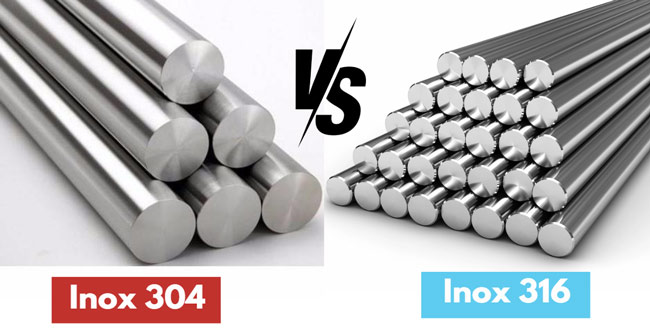
When placed on the scales Stainless steel 304 and 316The biggest difference lies in the added alloy composition:
- Stainless steel 304 (SUS 304): Containing approximately 18% chromium and 8% nickel, this is the ideal ratio that gives 304 stainless steel excellent corrosion resistance in normal environmental conditions and against mild chemicals.
- Stainless steel 316 (SUS 316): Contains approximately 16% chromium, 10% nickel, and Specifically, it is fortified with an additional 2%–3% Molybdenum (Mo).. Chính nguyên tố Molybdenum này là “vũ khí bí mật” giúp Inox 316 có khả năng kháng lại sự ăn mòn của Clorua (có nhiều trong muối biển) và các loại axit mạnh một cách vượt trội.
2. Comparison of applications: When to use 304, and when to use 316?
Choosing the wrong materials can lead to two scenarios: either the product quickly rusts (under-engineering), or the business wastes a huge amount of unnecessary money (over-engineering).
Applications of Stainless Steel 304 – “The national material”
Stainless steel 304 accounts for over 50% of global stainless steel production. It has excellent ductility and is easy to machine. bending and shaping and combined welding.
- Suitable for: Food processing lines (milk, beer, soft drinks), industrial kitchen equipment, clean water storage tanks, basic medical equipment, indoor industrial machinery housings, and urban interior and exterior architecture.

Applications of Stainless Steel 316 – “A warrior for harsh environments”
Although 304 stainless steel is very good, if continuously exposed to a salty seawater environment or a chloride-containing solution, it will still develop pitting corrosion. In this case, 316 stainless steel is the necessary solution.
- Suitable for: Accessories for shipbuilding, oil and gas drilling rigs, tanks for strong chemicals, wastewater treatment equipment, and surgical implants in medicine (requiring sterility and non-reactivity with the human body).
3. Guide to 3 accurate ways to identify 304 and 316 stainless steel.
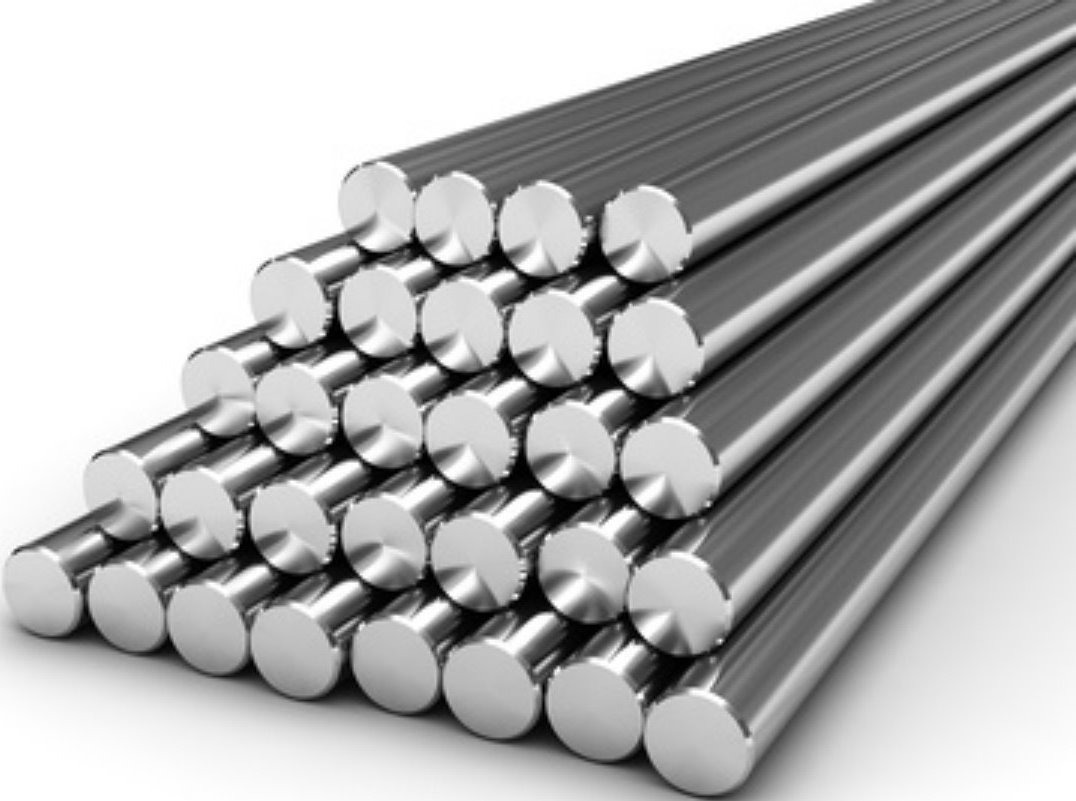
Because 304 and 316 stainless steel have identical polished (or hairline brushed) surfaces, it is impossible to distinguish them with the naked eye. Below are some examples. How to identify 304 stainless steel and 316 is common in industry:
- Use stainless steel reagent (specialized acid solution): Place a drop of the solution on the surface of the material. After a few minutes, 304 stainless steel will usually turn blue or show no noticeable color change, while 316 stainless steel may turn darker or not react at all (depending on the type of test solution). However, this method is only approximate.
- Using a spectrometer: This method is 100% accurate. The handheld spectrometer will analyze and display the content of elements (Chromium, Nickel, Molybdenum) directly on the screen, helping engineers accurately identify the steel grade in just 3 seconds.
- Requires CO/CQ (Mill Test Certificate): When placing orders for processing at professional factories, request that your partner provide a factory certificate for the batch of raw materials. This is the clearest legal proof of origin and steel grade.
*Note: Do not use magnets to test 304/316 stainless steel because after undergoing mechanical processing such as stamping, austenitic stainless steels can still develop slight magnetism.
4. The cost problem: How to choose the optimal solution?
Due to its higher nickel content and the addition of rare molybdenum, the price of 316 stainless steel is usually 30% to 40% higher than that of 304 stainless steel.
Expert advice from Metaltech 1:
- If your project operates in a typical factory environment, clean food processing, or architectural decoration, 304 stainless steel is the most economical choice while still ensuring a lifespan of several decades.
- Don't try to save money by using 304 stainless steel for coastal environments, ships, or chemical plants. The cost of maintenance, repair, and replacement when the system rusts will far exceed the initial material price difference of 316 stainless steel.
High-precision stainless steel fabrication at Metaltech 1 factory.
Processing stainless steel requires much stricter requirements than processing ferrous steel. From the Laser cutting should not leave behind scars.The folded part must have a protective film to prevent scratches, and so on. TIG welding of stainless steel It requires highly skilled craftsmen to avoid burning the workpiece and to create the perfect "dragon scale" patterns.
At Metaltech 1, we are committed to using the correct grade of stainless steel (304 or 316) as specified in the drawings, accompanied by complete CO/CQ quality certificates. Our state-of-the-art CNC machinery confidently meets all requirements for machining medical equipment, food processing equipment, and machine parts with the lowest tolerances.
